Voice Interfaces - A Big Thing In Technology
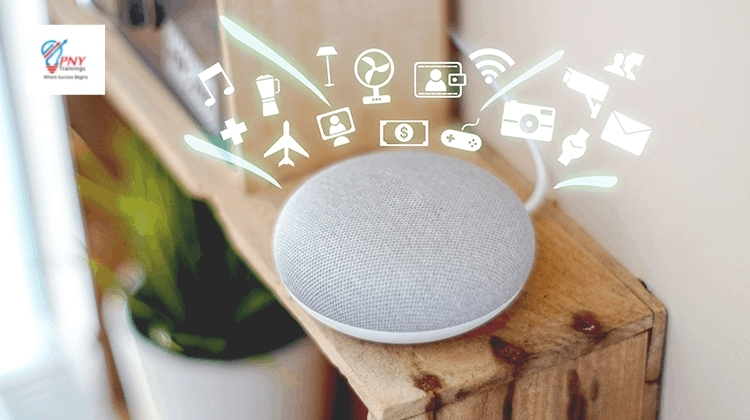
We can say thanks to Voice User Interfaces (VUI) that users can interact with a device or app using voice commands. Screen fatigue has become more common as the number of people using digital devices has increased. As a result, the development and use of voice user interfaces have become even more advantageous. Without having to look at the screen, VUIs provide hands-free, complete control over devices and apps. All of the “Big Five” technology companies, including Google, Amazon, Microsoft, Facebook, and Apple, have developed or are developing voice-enabled AI assistants and voice-controlled devices.
Speech recognition and natural language understanding technologies are used in voice UIs to convert user speech into text and meaning. Voice user interfaces are extremely intuitive because they make use of our most natural mode of communication: speech. They are significantly faster than typing for input but significantly slower than reading or seeing for output from the computer system to the user.
How voice interface technology works
The combination of many Artificial Intelligence (AI) technologies, such as Speech Synthesis, Automatic Speech Recognition, and Name Entity Recognition, has resulted in a Voice UI. Devices and applications can both benefit from voice UIs.
Where the VUI processes the user's voice and speech, the backend infrastructure and AI-powered speech components of the VUI are frequently kept in a private or public cloud. The device receives a response from AI technology that recognises the user's intent.
Speech recognition software that is automated (ASR). The VUI's initial job is to convert the spoken command into a machine-readable representation, which is usually text. ASR (automated speech recognition) was limited to a set list of commands in the early days of VUI's emergence, during the mid-2000s, and early speech-to-text engines were readily confused by differences in the speaker's speed, tone, and accent.
A voice-activated gadget will convert a spoken command into text, execute it, and prepare a response which would be a programmed text response. To complete the interaction loop with the user, a TTS (text to speech) engine converts the text into synthetic speech.
Early versions of VUI were difficult to use. The small differences in accents and dialects from one speaker to the next tripped it up. TTS responses were buzzy and unnatural, and often difficult to understand. Artificial intelligence is assisting in the resolution of these issues. Deep neural networks improve recognition over time by learning from genuine human speech. Natural language understanding (NLU) is the type of AI-driven ASR that allows Alexa to identify that “play my favourite playlist” and “let's listen to some music” are the same thing. Deep learning leads to voice models that mimic minor differences in user language, resulting in significantly more human-like speech on the TTS side.
VUI's Advantages
Dictating is quicker than inputting text messages, which makes it more handy for users.
Ease of use: Not everyone is comfortable using technology equipment. However, any user can utilise speech to ask VUI devices or AI helpers for a task.
Hands-free: Speaking is far more practical than typing or tapping in several situations, such as driving, cooking, or while you are away from your device.
Eyes-free: VUI offers an eye-free user interface. When driving, for example, you can concentrate on the road rather than the device. It's also useful for reducing screen fatigue.
Companies are using voice interface technology to streamline collaboration, expand branding opportunities, create better user experiences for their customers, and more. While the most familiar VUIs belong to cell phones and smart speakers, companies are using voice interface technology to streamline collaboration, expand branding opportunities, create better user experiences for their customers, and more. Here are a few real-world speech user interface examples: VUI is being used by manufacturers to control manufacturing lines and interact with the local industrial internet of things without having to put down their tools.
In the classroom, teachers employ VUI devices to answer student queries, provide rapid explanations and information, and even assist with language teaching.
Medical practitioners benefit from hands-free control of dictation machines in the healthcare area, which simplifies the compilation of medical records.
Employees may plan meeting rooms, reschedule appointments, and write notes within a closed, secure system by adding a VUI to server-based computer systems—all without touching a computer terminal.
Enterprise-ready voice assistant services are being offered by businesses. Synqq, for example, is a smart note-taking app that employs NLU to record meetings and highlight key events such as action item discussion. Companies wishing to apply VUI in their own unique customer service can start with conversational AI platform.
The fact that developers are compelled to alter communication rules to meet the device's constraints is the key hurdle impeding widespread implementation and acceptance of VUI systems. These constraints might make engaging with these devices a chore for consumers. Virtual assistants frequently find themselves in an unpleasant cycle providing countless possibilities for Italian restaurants or dog breeds since there are so many diverse, viable solutions to an inquiry.
Many developers have tried to address this by limiting the number of alternatives shown at first to three and then asking the user whether they want to hear more. To improve the user experience, we need to create robots that can grasp context, tone of voice, and attitude, as well as a better understanding of user intent based on historical data and previous patterns of behaviour. We need to go beyond a script that has already been written rather we should create something new.