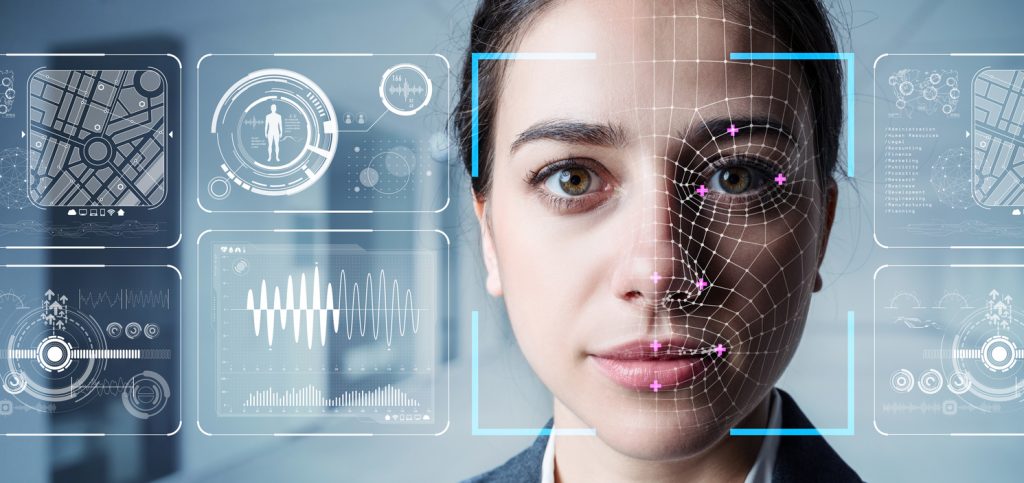
Face recognition is a technique for recognizing or validating an individual's identification by looking at their face. Face recognition software can identify persons in photographs, videos, or in real-time. During police stops, officers may use mobile devices to identify persons. Face recognition has also been used to track persons who engage in protected speech. Face recognition technology is anticipated to become more common in the near future. It might be used to track people's movements in the real world, similar to how automatic license plate readers follow cars by plate numbers. Face recognition in real-time is already being used in other nations, including during sporting events in the United States.
The difference with face characterization
The practice of employing software to classify a single face according to its gender, age, emotion, or other features is known as facial characterization. Facial classification is not to be confused with facial recognition, which is used to compare two different faces. In popular reportage, face characterization and facial recognition are commonly conflated, yet they are two different technologies. Many of the assertions made about the hazards of facial recognition are just about characterization.
Algorithms
Face recognition software uses computer algorithms to identify specific, distinguishing features on a person's face. These features, such as eye distance or chin shape, are then transformed into a mathematical representation and compared to data from other faces in a face recognition database. A face template is a data on a specific face that differs from an image in that it is designed to only include certain traits that can be used to recognize one face from another.
Biometric facial recognition, unlike other forms of identification such as passwords, email verification, selfies or photos, or fingerprint identification, employs unique mathematical and dynamic patterns that make it one of the safest and most successful. The goal of face recognition is to discover a series of data of the same face in a database from an incoming image. The biggest challenge is ensuring that this process happens in real-time, which is something that not all biometric face recognition software suppliers offer.
Facial recognition in mobiles
Fingerprint recognition reads the variations in conductivity generated by your finger's small ridges and compares them to a picture of your fingerprint it has learned. It's a widely acknowledged and trusted type of security, and cellphones have used touchpad IDs for years - the iPhone 5s, released in 2013, was the first phone on a major U.S. carrier to do so. Touch ID is a powerful tool, but it is not without faults. Dirt, oil, gloves, or injury to the user's finger may all impair how well it works, and the chances of your phone being unlocked by someone else's fingerprint are one in 50,000.
To unlock your phone, facial recognition relies only on your face. There are several advantages of using facial recognition on a phone:
There are no buttons to press, so it's quick and easy.
It examines several aspects of your face, such as the position of your eyes and the breadth of your nose, and then combines all of these characteristics into a single code that uniquely identifies you.
It may be used with your phone's built-in camera.
Your phone's odds of being unlocked by a random individual are one in a million.
What is facial recognition used for?
Security - law enforcement
Automated Biometric Identification Systems (ABIS) can be used to compare different forms of biometrics by forensic experts. The advantages of face recognition technologies for law enforcement are obvious: criminal detection and prevention. When it comes to providing identification papers, facial recognition is frequently used in conjunction with other biometric technology like fingerprints (preventing ID fraud and identity theft).
For attendance
Today, attendance is the most crucial factor for any organization to record someone's existence. Someone's presence in an organization indicates that they are fulfilling their duties to visit the agency or organization. Attendance is usually taken manually. One by one, it might be signed or called. To be able to speed and give time efficiency in this digital age, there must be a shift from this lack. Face recognition may be used to keep track of everyone in an organization's attendance. Face recognition uses a variety of techniques, including Machine Learning and Deep Learning, to analyze and collect pictures of someone's face. The system can detect a person's face and record their attendance using this algorithm, making attendance activities more efficient and speedier.
Health
It is now feasible to: track a patient's drug usage more precisely to discover hereditary disorders such as DiGeorge syndrome with a 96.6 percent success rate, and enhance pain management procedures using deep learning and facial analysis.
Challenges of Facial Recognition technology in future
(1) Face recognition algorithms that can adapt to variations in facial appearance from infancy to old age. For face recognition, lifetime invariance is a critical element. From the standpoint of technological constraints and limits, the issue of how long face pictures registered for babies or children will work is particularly intriguing.
(2) Countermeasures for anti-face-recognition shields. Although exceptionally high matching accuracy in typical conditions has been anticipated, enhancements are required when the persons to be verified are wearing a face mask and/or sunglasses, or when their faces are completely hidden by a scarf or beard.
(3) Improving the matching accuracy of twins, siblings, or other relatives. This is still a technological hurdle to overcome. Non-mate-pair twins have a higher facial similarity than the same individual at various ages.
Facial recognition has been proven to be the best technology till now because it has lessened the security threats and risk of data mismanagement but still there are some improvements to be made in the future for better working.