Artificial Intelligence is evolving faster than ever, and one of the most powerful innovations leading this transformation is Agentic AI. Unlike traditional AI systems that simply follow instructions, Agentic AI can think, decide, act, and learn independently. This shift is redefining how businesses, developers, and everyday users interact with technology.
Publish date: 2/3/2026
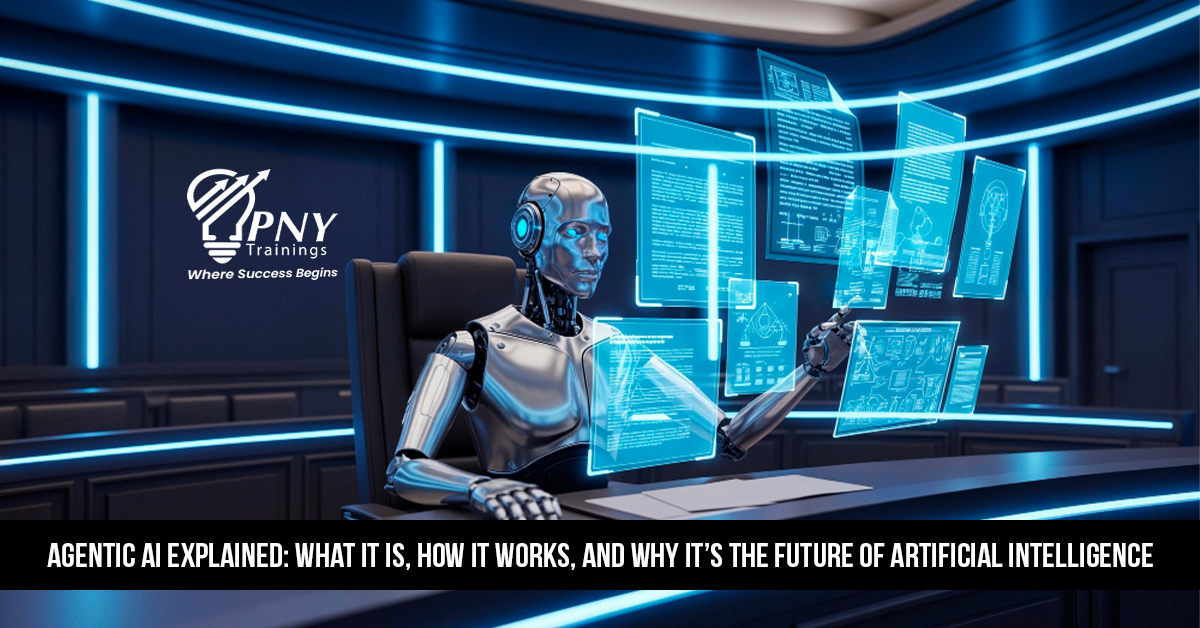
In this guide, we’ll break down what Agentic AI is, how it works, and real-world use cases that show why it’s considered the next big leap in artificial intelligence.
Agentic AI refers to AI systems designed to act as autonomous agents. These agents can set goals, plan steps, make decisions, execute actions, and adapt based on outcomes often with minimal human intervention.
Unlike traditional AI models that respond to a single prompt or command, Agentic AI works continuously. It can:
In simple terms, Agentic AI behaves more like a digital employee than a simple chatbot.
Agentic AI operates through a structured decision-making loop. While implementations may vary, most Agentic AI systems follow these core steps:
1. Goal Understanding
The AI receives a goal, such as “analyze website SEO performance” or “automate customer support responses.”
2. Planning
It creates a strategy by breaking the main goal into manageable tasks. This planning ability is what makes Agentic AI different from rule-based automation.
3. Action Execution
The agent interacts with tools, databases, APIs, or software to complete tasks—such as fetching data, generating content, or triggering workflows.
4. Observation & Feedback
After performing actions, the AI evaluates results. If something doesn’t work, it adjusts its approach.
5. Learning & Optimization
Over time, Agentic AI improves performance by learning from successes, failures, and real-world feedback.
This continuous loop allows Agentic AI to operate independently, efficiently, and intelligently.
Key Features of Agentic AI
These features make Agentic AI ideal for modern, fast-paced digital environments.
1. Business Process Automation
Agentic AI can manage end-to-end workflows like lead generation, report creation, scheduling, and follow-ups saving time and reducing human error.
2. Customer Support & Virtual Assistants
Unlike traditional chatbots, Agentic AI agents can handle complex queries, escalate issues, access customer data, and even resolve problems independently.
3. Software Development
Agentic AI assists developers by writing code, debugging errors, running tests, and deploying applications—acting like a smart coding partner.
4. Smart Education & Personalized Learning
Agentic AI is transforming the education sector by creating personalized learning experiences. It can analyze a student’s progress, identify weak areas, recommend learning paths, generate quizzes, and even adjust teaching methods in real time. This makes learning more effective, adaptive, and accessible for students of all levels.
5. Finance & Trading
In fintech, Agentic AI analyzes market trends, executes trades, manages risk, and adapts strategies in real time.
6. Healthcare & Research
Agentic AI supports diagnosis, research analysis, patient monitoring, and workflow automation while assisting professionals rather than replacing them.

As businesses demand smarter automation and users expect more personalized experiences, Agentic AI fills the gap. It doesn’t just respond t acts with purpose.
With advancements in large language models, tool integration, and reinforcement learning, Agentic AI is becoming more reliable, secure, and scalable. In the coming years, we’ll see Agentic AI agents working alongside humans in almost every industry.
Agentic AI represents a major shift in artificial intelligence from passive systems to active, goal-driven digital agents. Whether it’s automating workflows, enhancing productivity, or driving innovation, Agentic AI is shaping the future of technology.
Usman Farooq is a business professional with experience in entrepreneurship and growth strategy. He shares practical insights on managing and scaling modern businesses. His writing focuses on real-world challenges and sustainable business models.
FAQs
Frequently Asked Questions
Visit the nearest PNY location or connect with us internationally. Each branch is designed to support your learning journey with expert mentors and modern facilities.
On-Campus
Office No.1, Level 14, Arfa Software Technology Park, Ferozepur Road, Lahore
Visit branch pageOn-Campus
743 B Kashmir Block Allama Iqbal Town, Lahore
Visit branch pageOn-Campus
313/D, Shalimar Town, near Go Petrol Pump, Lahore
Visit branch pageOn-Campus
Office # 102, Floor #1 Talha Heights Plot # 21-D, 6th Road Satellite Town, Rawalpindi
Visit branch pageOn-Campus
237-B, Model Town, Main Boulevard, Multan
Visit branch pageOn-Campus
House No. #25/C, 25 Lower Mall, St Nagar, Lahore, 54000
Visit branch pageOn-Campus
Mawk Tech Space, 2nd Floor Ahsan Cash & Carry, near Zafar Ullah Chowk, Sargodha
Visit branch pageChoose your city to discover curated learning paths, expert-led sessions, and upcoming cohorts tailored to your local community.
Head Office
Office # 1, Level # 14, Arfa Software Technology Park, Ferozepur Road, Lahore.
WhatsApp: 0327-7771361