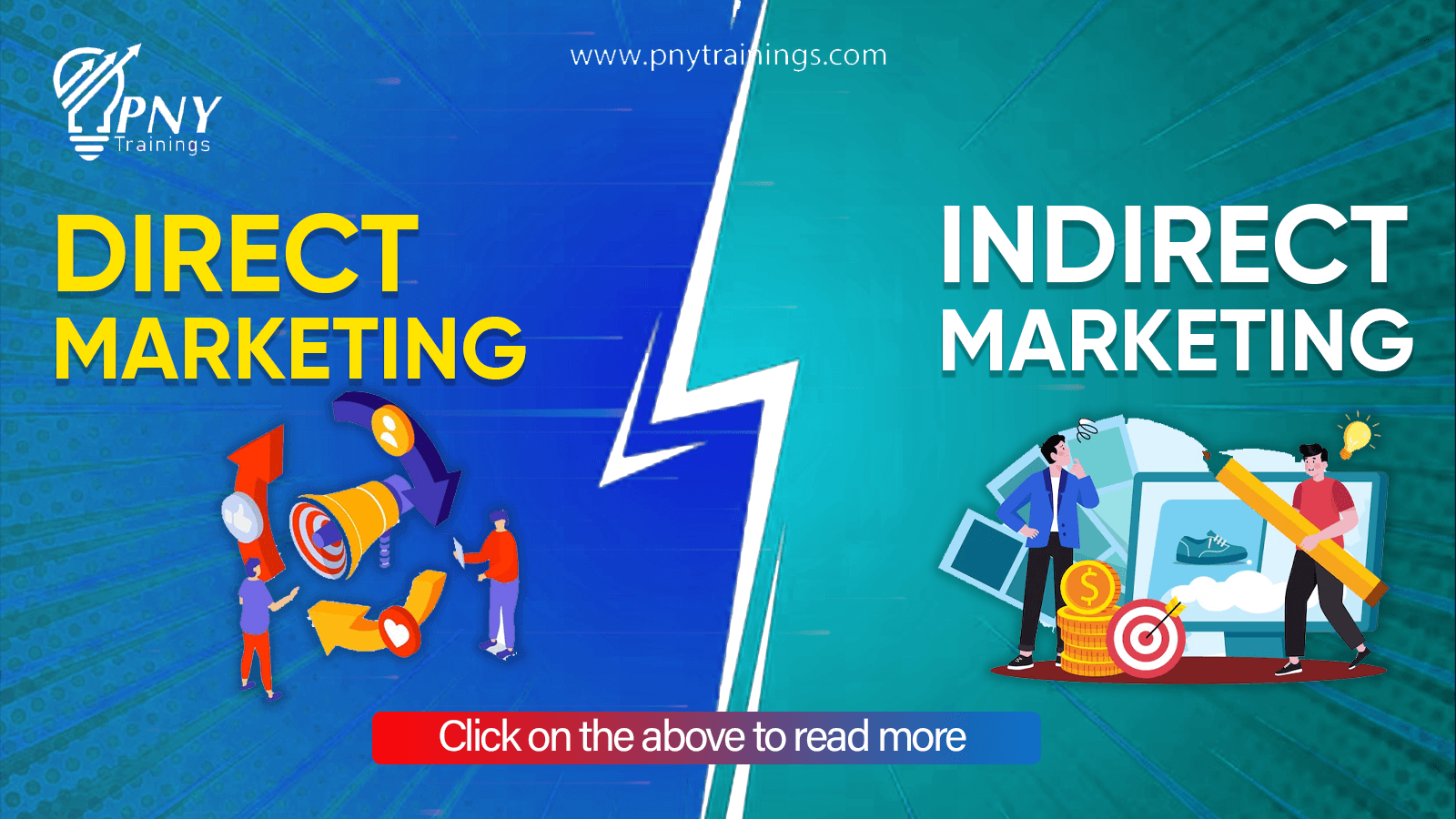
Direct vs Indirect Marketing
Direct Marketing
It is a type of marketing that deals with direct marketing methods such as email, text messages, phone calls, and print advertising.
Direct marketing deals with a method in which a company gets into a conversation with clients directly. In this procedure, they communicate and issue addresses that will ultimately help in effective marketing. It refers to a promotional method in which a company can build and maintain its brand image while raising awareness proficiently. Moreover, it is also termed door-to-door marketing in which employees make their customers know about the products.
There are some aspects that are important to consider in direct marketing:
Identifying Audience
Getting to know your audience and addressing them accordingly is the best approach to implementing direct marketing strategies. By knowing your audience, you can address their issues, make the specifications accordingly, and make changes. This includes segmenting the audience into specific groups based on factors such as age, gender, income, interests, and purchasing behavior.
Database Management
Maintaining accurate and up-to-date customer databases is crucial for personalized and targeted direct marketing campaigns. In this scenario, businesses need to collect, organize, and analyze customer data to better understand their preferences, purchase history, and communication preferences.
Creative Content Development
It is the most crucial part of direct marketing. Your content is the thing that engages your audience and makes them stick to your brand. Creating quality content will help you to get organic traffic. This also increases engagement, brand awareness, audience connection, reach, response rate, and personalization, and ultimately helps to get measurable results.
Measurement and Tracking
Direct marketers use various metrics to measure the effectiveness of their campaigns, such as response rates, conversion rates, and return on investment (ROI). Tracking tools and analytics help marketers analyze campaign performance and optimize future efforts.
Call to Action(CTA)
Direct marketing campaigns typically include a clear and compelling call to action that prompts recipients to take immediate action, such as making a purchase, requesting more information, or visiting a website.
Indirect Marketing
Indirect marketing refers to promotional services where the company does not get into interaction with their customers directly. This type of marketing relies on various methods and channels to raise awareness generate interest, and influence purchasing decisions indirectly.
Advertising
Advertising through traditional media channels such as television, radio, print, and outdoor billboards is a form of indirect marketing. Advertisers aim to reach a broad audience with their messages and create brand awareness without engaging in direct communication with individual consumers.
Publicity
Public relations activities, such as press releases, media coverage, events, and sponsorships, are forms of indirect marketing. These efforts aim to generate positive publicity and enhance the reputation and visibility of a brand or organization among the target audience.
Content Marketing
Content marketing involves creating and distributing valuable, relevant, and informative content to attract and engage the target audience. Through blog posts, articles, videos, infographics, and other content formats, marketers indirectly promote their brand, products, or services by providing helpful information and building trust with consumer.
Social Media Marketing
Social media marketing involves using social media platforms such as Facebook, Twitter, Instagram, and LinkedIn to promote products or services, engage with customers, and build brand awareness. Marketers leverage social media channels to share content, interact with followers, and participate in conversations relevant to their industry or niche.
Search Engine Optimization (SEO)
By optimizing website content, structure, and technical elements, marketers indirectly attract organic traffic from search engines and increase brand visibility among users searching for relevant information or solutions.
Event Marketing
Event marketing involves organizing or sponsoring events, conferences, or seminars to showcase products or services, engage with customers, and build brand awareness. By participating in industry events or hosting their own, marketers can indirectly reach and influence a targeted audience in a meaningful way.